By Samira Adnan
Muhammad Khamis remembers a time when a small fish pond in Tassa was more than just a water-filled patch of land. A local teacher had created it with grasses, water plants and fish, using it to support livestock grazing and school entrepreneurship projects. Today, that pond is gone. Sand mining has eaten into the land around it, leaving behind a community increasingly worried about what may disappear next.
For residents of Tassa in Dawakin Kudu Local Government Area of Kano State, the destruction is no longer confined to farms and vegetation. Wells are drying up, homes are becoming vulnerable, and livelihoods built over decades are being lost as sand miners dig deeper into the soil.
Khamis, a resident of Tassa, says the continued extraction of sand is putting the community’s future at risk. He warned that if the activity continues unchecked, future generations could be left without enough farmland, livestock-rearing areas or even safe places to live.
Tassa is one of several areas in Kano where sand mining has expanded because of strong demand for construction materials. Other major mining locations include Kura, Madobi, Ungogo, Tamburawa, Challawa, the River Wudil area, the Watari River Basin and parts of the Eastern Bypass.
While sand is essential for construction, residents and environmental experts say uncontrolled extraction around farms, homes, rivers and water sources is causing serious environmental and social damage. Thousands of hectares of farmland are reported to have been affected in some communities, threatening the livelihoods of people who depend on agriculture.
Abdulwahab Tsoho Adamu, another resident of Tassa, said miners have dug sand from private farmland, sometimes putting pressure on landowners to surrender their property. He said crops including tomatoes, onions and mangoes have been destroyed, with more than 100 mango trees cut down and sold.
The effects are also being felt through water shortages. Residents say wells and boreholes that once supplied households have dried up, forcing families to depend on the few remaining water sources and, in some cases, wait in long queues to collect water for domestic use.
Yahaya Hussaini, 46, a resident of Tassa, said his well, which had supplied water to his neighbours for about 20 years, has now sunk. He and his family have been forced to depend on neighbours whose wells are still producing water and, occasionally, on pipe-borne water from the Tamburawa Water Treatment Plant, which he said is not constant.
Hussaini said he now lives in constant fear because his house is close to an area affected by the collapse of the ground. He said the condition of the property is worsening and that he is considering relocating his family to avoid what he described as a potential disaster.
For 74-year-old Kubra Ahmed, the loss is deeply personal. A mother of five, she planted mango trees that became the main source of income for her family. The fruit from the trees helped her raise her children, support members of her extended family and provide marriage support for her daughters.
“Well, my well is dry,” she said quietly. “The ground fell, and the water ran, and my trees fell down in a row.”
Kubra said she lost 11 mango trees in 2023. By 2024, she had begun cutting down and turning some of the remaining trees into charcoal because they were no longer producing fruit. She estimated that the mango trees generated about N2 million a year for her family.
For Kubra, the loss is not simply financial. She said the trees represented years of work, family heritage and a major part of her identity as a woman who had used farming to support her household. With the trees gone, she said, her family can no longer depend on the mango business that once sustained them.
Abdullahi Ali Mai Biredi, Chairman of the All Farmers Association of Nigeria in Kano, said sand mining has affected farmland across the state’s 44 local government areas. He said erosion linked to mining has reduced agricultural land, caused significant losses and made access to farms more difficult.
Malam Umar Musa Umar of the Geography Department at Northwest University Kano said communities affected by environmental degradation face both land and water challenges. He said the loss of reliable water sources affects drinking, farming and livestock production, while excessive exploitation of natural resources further weakens the land.
Umar said communities need to adopt water conservation measures, including water harvesting and the construction of ponds or pits where appropriate. He also advised farmers to respond to changing rainfall patterns by using early-maturing crops, rotating crops and adopting suitable organic and modern fertilisers.
He also cautioned farmers against indiscriminate removal of trees, noting that trees help retain moisture in the soil and maintain ecological balance. He said only necessary trees should be removed while others should be preserved.
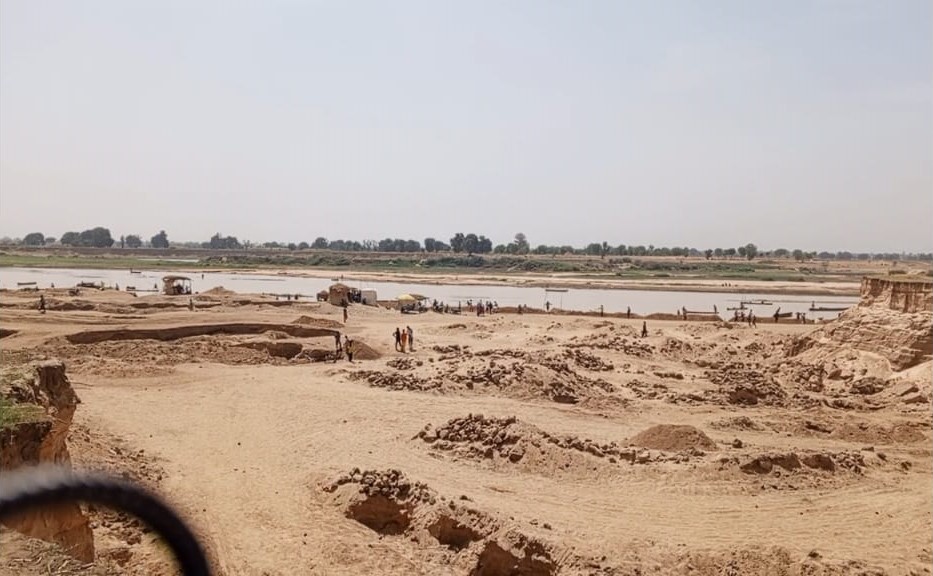
Public affairs analyst Haruna Manu Isah said uncontrolled sand extraction has transformed parts of Kano’s landscape, leaving behind large craters, stagnant water, degraded land and areas vulnerable to erosion and flooding. He said the damage threatens farms, roads and homes while weakening the state’s ecological resilience.
Isah said existing national regulations, including the Environmental Impact Assessment Act, the Minerals and Mining Act and NESREA regulations, are either too general or poorly enforced to adequately address the scale of the problem. He also noted that Kano State currently lacks specific legislation or guidelines dedicated to regulating sand mining and borrow pits.
Mr Lukman Muhammad Lawal, Kano Coordinator of the National Environmental Standards and Regulations Enforcement Agency, said mining licences issued by the Federal Ministry of Solid Minerals do not mean operators can ignore environmental and safety requirements. He said mining should only proceed after proper assessments and compliance with relevant regulations.
The Kano State Watersheds, Erosion and Climate Change Management Agency has also described the environmental consequences of sand mining as a serious crisis requiring urgent action. Its Executive Secretary, Dr Muhammad S. Khalil, warned that continued environmental degradation could contribute to food shortages, rising prices, famine and worsening soil erosion.
Khalil said the agency is working on a bill that would introduce tougher measures against unregulated mining and require mined areas to be restored or properly sealed after extraction. “We are still refining the bill,” he said, adding that the state government is working with lawmakers on policies to prevent further environmental destruction.
Experts and residents agree that sand remains important to Kano’s construction industry, but they say extraction must be controlled. They are calling for clearly designated mining zones, environmental assessments, enforcement of existing regulations and restoration of damaged sites.
For people like Muhammad Khamis, Yahaya Hussaini and Kubra Ahmed, however, the issue is no longer an abstract environmental debate. It is about water, homes, farms, trees and livelihoods that are disappearing beneath the pressure of a rapidly expanding sand-mining industry.
The call for action
The evidence from Tassa and other affected communities points to a need for stronger monitoring and enforcement. Residents want authorities to distinguish between areas where sand can legally be extracted and areas that must be protected because of their importance to farming, housing and water supply.
Without such intervention, experts warn that the immediate economic benefits of sand mining could be outweighed by long-term costs, including loss of farmland, water insecurity, erosion, flooding, displacement and declining agricultural productivity.
This reporting was completed with the support of the Centre for Journalism Innovation and Development (CJID)
About the Author