By Samira Adnan
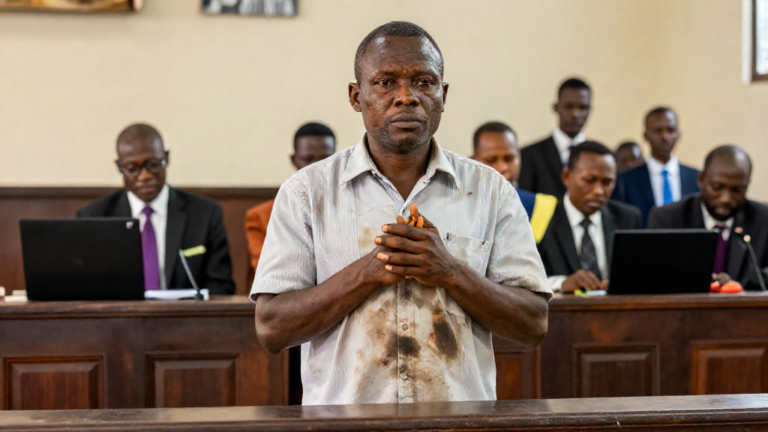
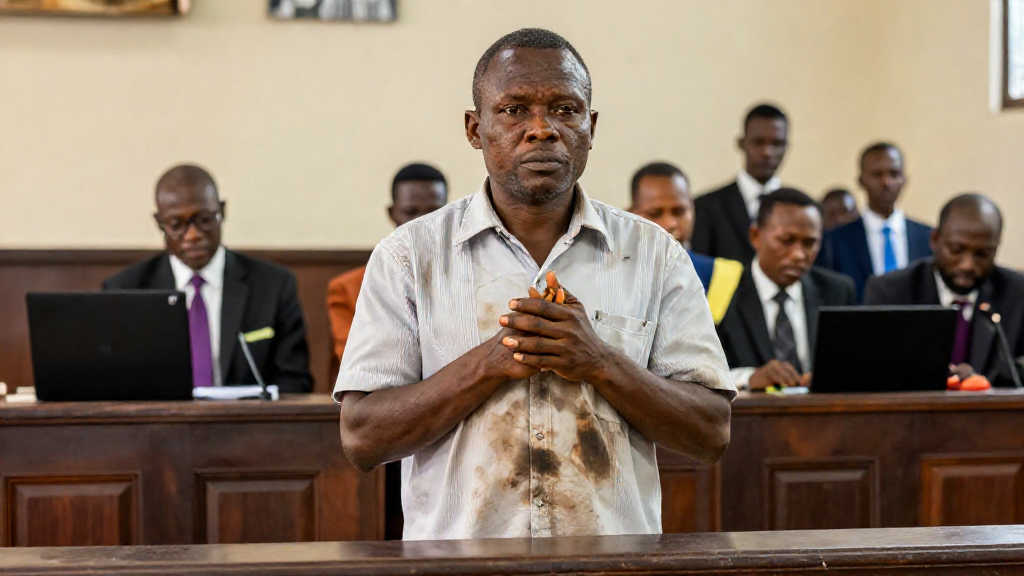
A developing court case in Kano involving a vigilante commander accused of receiving a stolen motorcycle has sparked debate over due process, confessional evidence and the protection of fundamental human rights.
At the centre of the controversy is Sagir Muhammad, a community vigilante commander, who was accused by a suspected motorcycle thief of purchasing a stolen Lifan motorcycle.
The allegation was later retracted in open court, with the suspect admitting he had lied and was pressured to implicate the commander.
Despite the retraction, the case has proceeded through multiple adjournments, and the commander has remained in detention for extended periods, prompting intervention by human rights advocates and legal experts.
The Allegation and Retraction
According to court accounts, the suspect initially told investigators at the State Criminal Investigation Department (CID) that he had sold the stolen motorcycle to the commander and claimed the commander regularly bought stolen bikes from him.
However, during court proceedings, the suspect reversed his statement.
“He declared that, Wallahi, the accusation was false,” said Comrade Hafizu Sanka, Secretary of the International Human Rights Commission (IHRC). “He admitted that he defamed the man and that someone pressured him to make that statement.”
Sanka said the organisation has evidence, including a recorded statement from the suspect.
“He mentioned the name of the person who allegedly influenced him. We are investigating that angle and will not allow this matter to be swept under the carpet,” he said.
Multiple Adjournments, Bail Denied
The case, which began at Kumbotso Court, was later transferred to another court, where it has seen repeated adjournments of 47 days, 45 days and 42 days respectively.
At each sitting, applications for bail were made but not granted, according to rights advocates.
“This man has two wives and nine children,” Sanka said. “With no one to provide for them, are they to be turned into beggars? Justice must consider the human consequences.”
The presiding judge reportedly stated that the case must proceed based on formal charge documents and due process, adding that an accused person cannot automatically exonerate another accused person.
Vigilantes Speak: Operational and Institutional Challenges
Beyond the courtroom, the case has also exposed structural challenges faced by community vigilante groups.
Isma’ila Shua’ibu, Vigilante Area Commander for Hotoro Zone Four in Tarauni Local Government Area, said volunteers often bear the burden of both arresting suspects and pursuing cases through the justice system.
“When we arrest a suspect and hand him over to the police, community members do not follow up at the police station or in court,” he said. “They expect us to do everything, even though we already work overnight providing security.”
He also highlighted funding constraints.
“This is voluntary service. In many areas, we buy our equipment with personal funds. When support declines, morale declines,” he said.
Shua’ibu added that while some agencies such as the NDLEA have provided cooperation, inconsistencies in follow-through sometimes undermine accountability.
Legal Perspective: Confession and Due Process
Human rights lawyer Barrister Adam Bashir provided a detailed legal analysis of the case, focusing on the concept of confessional statements in criminal law.
“There are two types of confessions :- extra-judicial and judicial,” he explained. “An extra-judicial confession is made outside the court, such as before the police. A judicial confession is made before a court.”
Bashir said when a suspect implicates another person, the police are obligated to verify the claim through investigation before filing charges.
“If a suspect later retracts his statement in court and admits he lied, the proper legal step is to order further investigation,” he said. “The court must determine whether the retraction was voluntary and truthful, or made under threat or inducement.”
He cited Section 36 of Nigeria’s Constitution, which guarantees the presumption of innocence.
“At the very least, bail should be considered pending further investigation,” Bashir argued. “Prolonged remand without strong evidentiary basis raises constitutional concerns.”
Possible Legal Remedies
Bashir outlined potential legal pathways available to the accused if rights violations are established:
Malicious Prosecution: A civil claim against individuals who initiated prosecution without probable cause.
Judicial Review: An application before a higher court to assess whether lower court procedures complied with constitutional standards.
Enforcement of Fundamental Rights: Under Sections 34 and 36 of the Constitution, individuals may seek redress for unlawful detention, denial of fair hearing or degrading treatment.
“If someone has been unlawfully detained or defamed, the Constitution provides remedies,” he said. “The courts must not only apply the law but also ensure justice is seen to be done.”
Toward Solutions: Strengthening Due Process
Legal experts and rights advocates say the case presents an opportunity to strengthen investigative standards and reinforce safeguards in criminal proceedings.
They recommend:
Mandatory corroboration of confessional statements before charging co-accused persons.
Prompt judicial review where a key witness retracts testimony.
Expanded legal aid to ensure timely bail applications.
Institutional collaboration between vigilante groups and law enforcement to clarify procedural responsibilities.
Sanka emphasised that their intervention is not an attack on the judiciary but an appeal for procedural fairness.
“We respect the courts,” he said. “But justice must be thorough, transparent and humane. Where there is doubt, the law provides mechanisms to correct it.”
As the next hearing approaches, observers say the case may serve as a test of how Nigeria’s justice system balances procedural rigor with constitutional protections and how community-based security efforts intersect with formal legal institutions.
For now, the central question remains whether the retracted accusation will withstand further legal scrutiny and whether available remedies will provide timely relief if due process has indeed been compromised.
This report was published with the support of HumAngle under SCOJA Fellowship.
About the Author